When Milton Steinberg broke ground on his first Middle Village house in 1950, he didn't advertise Middle Village. The area was trying to rename itself "Forest Hills West," and that was the name he used in his ads for Juniper Estate Homes. That's how the Juniper Park Civic Association's Juniper Berry history of Steinberg tells it. He built about 200 brown-brick homes south of Juniper Valley Park, priced from $11,990 to $17,990 depending on the model. By 1954 the old name was back and his ads used it again.
Seventy-odd years later, buyers still put the two neighborhoods side by side, usually because they ran a search for a Forest Hills house and didn't like the results. According to NYC Department of Finance sale records, most of the difference between the two neighborhoods is in what kind of house is selling. At the price where most of these searches start, about $1 million to $1.2 million, each neighborhood sells a different product.
The headline gap is mostly Forest Hills' big houses
PropertyShark's house-only figures for the third quarter of 2026 put the Forest Hills median at $1.5 million across 33 sales, up 22.2% from a year earlier. PropertyShark's Forest Hills page has the numbers. In the same quarter, Middle Village houses had a median of $928,000 across 44 sales, up 2%, according to PropertyShark's Middle Village page. That's a gap of roughly 60%.
Price per square foot shrinks it a lot. The same Q3 2026 data has Forest Hills houses at $821 a square foot and Middle Village houses at $678. That puts Forest Hills about a fifth higher per foot. Dividing one median by the other is rough math, not a measured house size. Still, it shows that much of the 60% comes from Forest Hills selling bigger houses, not from every foot costing that much more.
The city's rolling sales file shows where those bigger houses are. The file covers Queens sales from November 2025 through October 2026, with data current as of November 10, 2026. In Forest Hills, 50 Shorthill Road sold on May 27, 2026 for $3,425,000. It has 5,712 square feet of building on a 7,770-square-foot lot. On June 29, 205 Puritan Avenue sold for $2,380,000, and 152 Whitson sold for $2,438,000 on September 4. Most of these are coded A3, which the Department of Finance defines as a "large suburban residence." A quarter with only 33 house sales doesn't take many of them to move the median. That's one reason we've written before about why Forest Hills price headlines can contradict each other.
Middle Village has no equivalent group at the top. Its quarterly house median has stayed in a narrow band. Third-quarter medians were $874,000 in 2022, $935,000 in 2023, $884,500 in 2024, $910,000 in 2025 and $926,500 in 2026. Sales ran 46, 48 and 46 in the first three quarters of 2026. It's a steady market, and neither its prices nor its sales volume have jumped.
At $1 million to $1.2 million, the products diverge
A family with a budget of about $1 million to $1.2 million is shopping where the two neighborhoods actually overlap. The city records show they sell different things at that price.
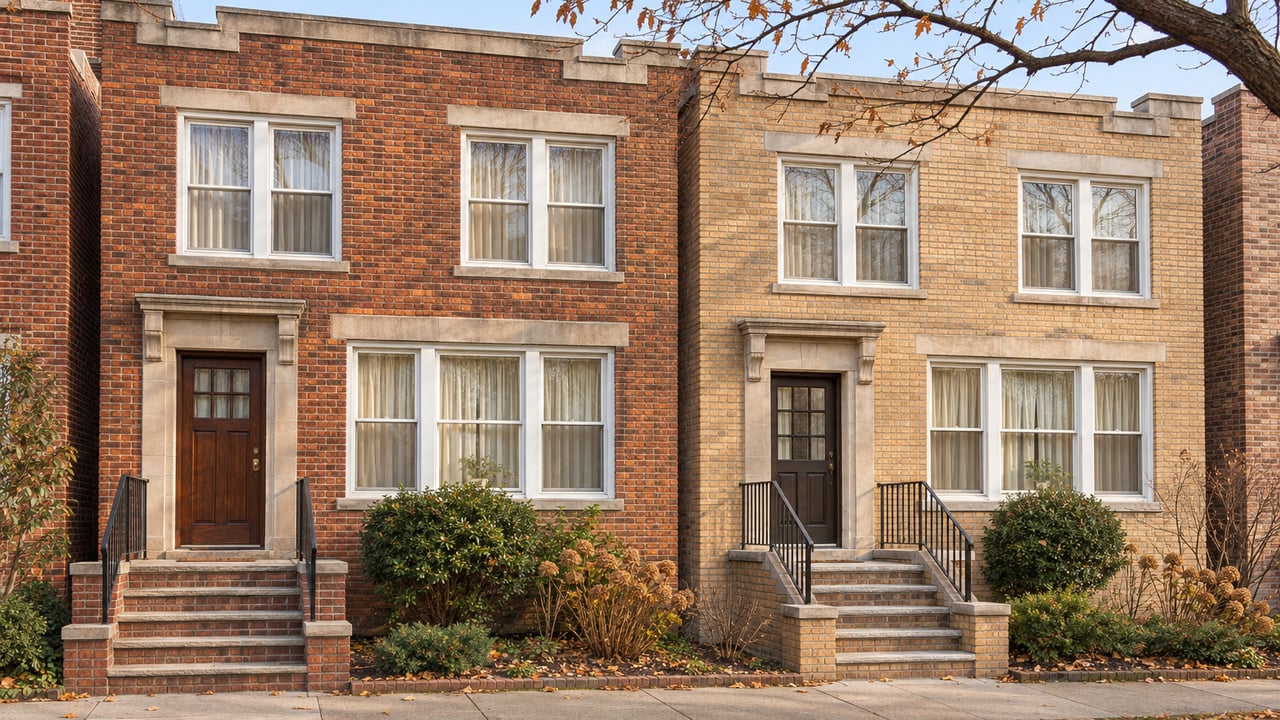
In Forest Hills, that money mostly buys a one-family attached or semi-detached house. The Department of Finance codes these as A5. In Middle Village, the same money often buys a two-family house.
| Address | Neighborhood | DOF class | Building sq ft | Sale price | Sale date |
|---|---|---|---|---|---|
| 67-79 Exeter Street | Forest Hills | A5 one-family | 1,224 | $1,150,000 | 06/02/2026 |
| 68-37 Nansen Street | Forest Hills | A1 one-family | 1,248 | $1,210,000 | 10/07/2026 |
| 6766 Exeter Street | Forest Hills | A5 one-family | 1,278 | $1,310,000 | 10/16/2026 |
| 113-09 Union Turnpike | Forest Hills | A1 one-family | 1,644 | $1,120,000 | 09/09/2026 |
| 58-13 69th Place | Middle Village | B2 two-family | 1,944 | $1,180,000 | 09/18/2026 |
| 59-36 69 Place | Middle Village | B2 two-family | 2,012 | $960,000 | 08/26/2026 |
| 60-09 69th Place | Middle Village | B2 two-family | 2,080 | $1,164,000 | 09/25/2026 |
| 60-71 72 Street | Middle Village | B1 two-family | 2,035 | $1,075,000 | 07/24/2026 |
The Forest Hills homes in this range are around 1,200 to 1,650 square feet. The Middle Village two-family houses at about the same prices are around 1,950 to 2,080 square feet. The Department of Finance codes B1 as two-family brick and B2 as two-family frame, and both types sell regularly at this level. A few more examples: 59-29 70 Street, a brick two-family, sold for $1,155,000 on July 15. The house next door at 59-25 70th Street sold for $999,000 on September 29. 69-25 59 Road sold for $999,000 on July 1.
Size is only part of the difference. A second unit changes how a family can use the house. It can house relatives, give a home office its own door, or be rented. Whether a second unit fits your plans is your call. The records just show that in Middle Village, it's part of what $1 million commonly buys.
Forest Hills one-family homes do sell in this range, and some sell for less. On August 26, 67-93 Dartmouth Street, an attached one-family, sold for $760,000. These attached blocks are a separate market from the detached houses of the Gardens. If you're weighing them against each other, our post on Forest Hills Gardens versus Cord Meyer covers that choice in Forest Hills.
Middle Village one-family homes, and what costs more
Buyers who want a one-family house in Middle Village find it under the neighborhood median, and the house types differ from block to block. In 2026, 58-18 77 Place, an A5 with 1,582 square feet of building on a 2,938-square-foot lot, sold for $950,000 on September 30. On September 10, 59-30 71st Street sold for $1,110,000 with 1,512 square feet. On September 1, 59-62 69 Lane sold for $820,000 with 946 square feet. In February, 82-30 58 Avenue, a one-story house on a 4,000-square-foot lot, sold for $1,500,000.
Newer construction is at the top of the Middle Village two-family market. 69-60 Caldwell Avenue, a brick two-family built in 2023, sold for $1,680,113 on August 25. 77-03 58 Avenue, built in 2000, sold for $1,600,000 on October 20. At that price a buyer is competing with the Forest Hills A5s that sell above $1.4 million, such as 111-09 75th Road at $1,411,000 in May and 90-16 68 Avenue at $1,750,000 in September. Above $1.5 million, both neighborhoods are competing for the same buyer.
The Department of Finance's "Middle Village" also covers more ground than many buyers expect. Several of the two-family sales above, along 69th Place, 69th Lane and 70th Street, carry the 11378 ZIP code, not 11379. If you set up a portal search by ZIP code, you'll miss some of the sales that make up the neighborhood's numbers.
The house stock, block by block
The variety in those sales goes back to how Middle Village was built. Steinberg's Juniper Estate Homes are on Pleasantview Street and Penelope Avenue and on the streets between 73rd Place and 77th Place, from Juniper Boulevard South to Furmanville Avenue. He sold four models: one- and two-story attached bungalows, one-story detached ranches, and two-family rowhomes. According to the Juniper Berry, most of them still look much as they did originally. His two-story model was sold with a built-in garage and a reinforced basement shelter under it, which was a Cold War selling point.
Older frame houses are farther west. The Juniper Berry's history of Middle Village's farms and residences records frame houses going up on Admiral Avenue, 65th Street and 65th Place in 1923. The years built in the 2026 sales records follow the same pattern. Two-family frame houses along 69th Place and 59 Road date from 1910 to 1930, and brick two-family houses on 70th Street and 72 Street date from 1955.
Juniper Valley Park ties much of the neighborhood together. The Works Progress Administration built it in phases, and part of it was once the Juniper Valley Swamp. Its upper bathroom renovation was finished in June 2026, earlier than the original October target. PoliticsNY reported that Council Member Phil Wong pressed NYC Parks to speed up the work before the park's summer events.
The M train runs between the two
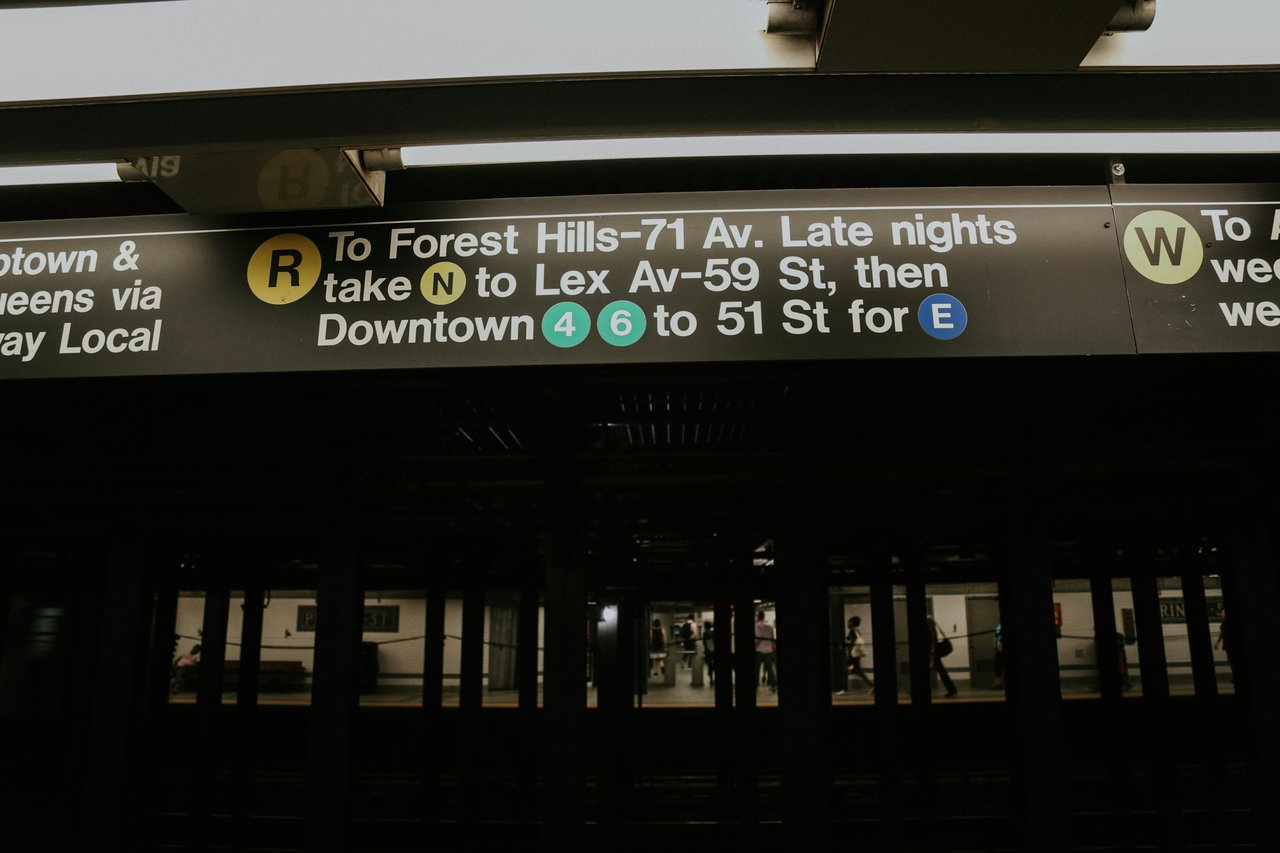
On weekdays, the M train runs directly between Middle Village–Metropolitan Avenue and Forest Hills–71 Avenue. Since December 8, 2025, the weekday M has used the 63rd Street route in Manhattan, stopping at 21 St–Queensbridge, Roosevelt Island, Lexington Av/63 St and 57 St, and it still runs local in Queens. On weekends it runs between Middle Village and Delancey St–Essex St. Late at night it runs only between Middle Village and Myrtle Avenue. The MTA's notice on the F and M swap has the details. If you'll commute by subway, check the weekday route against your own trip before you compare prices.
The proposed Interborough Express includes a stop at Eliot Avenue in northern Middle Village. The MTA's IBX project page lists a draft environmental impact statement as anticipated in late 2026, with design work and public feedback continuing through 2027. For now it's a proposal, not a scheduled line.
FAQ
Is Middle Village cheaper than Forest Hills per square foot? Yes, though by less than the medians suggest. In Q3 2026, houses sold for a median of $678 a square foot in Middle Village and $821 in Forest Hills.
Do Forest Hills houses ever sell near the Middle Village median? Yes. Attached one-family homes on streets such as Exeter Street and Dartmouth Street sold between $760,000 and $1,310,000 from June through October 2026.
Is the Middle Village market accelerating? The figures say no. In Q3 2026 the house median was up 2% from a year earlier, and quarterly sales have stayed between 46 and 48 this year.
If you're deciding between a small attached house in Forest Hills and a two-family on a Middle Village block, talk it through with Rachel Borut, a lifelong Forest Hills resident who works across Queens. More on the area is on our Queens neighborhood page. When you're ready to compare specific houses, schedule a consultation.