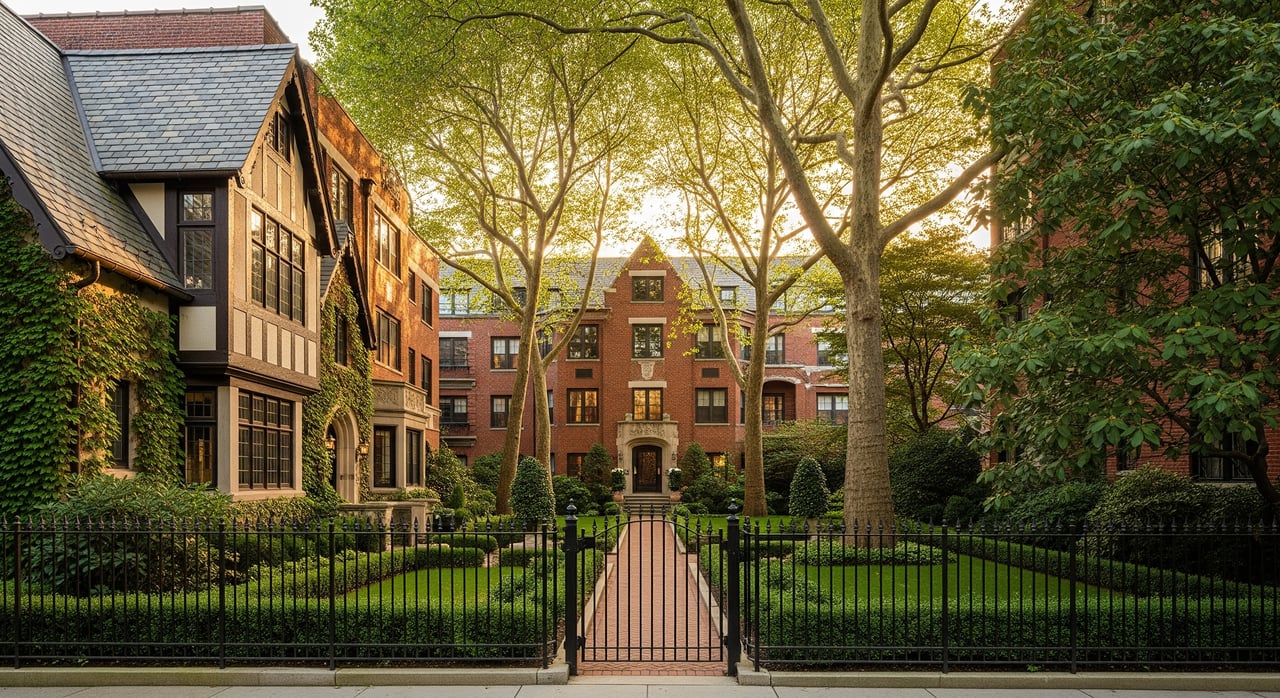
Torn between Forest Hills Gardens and Cord Meyer? You’re not alone. Both micro-neighborhoods sit within Forest Hills, yet they offer very different vibes, home types, and renovation paths. If you want a clear, side-by-side way to decide what fits your lifestyle, this guide is for you. You’ll learn how the architecture, streetscape, commute, and community rules translate into day-to-day living so you can buy with confidence. Let’s dive in.
Quick neighborhood snapshots
Forest Hills Gardens at a glance
Forest Hills Gardens is a historic, planned garden community known for its cohesive architecture and village feel. Blocks are smaller, streets curve, and you’ll see coordinated façades, garden courts, and mature trees. It sits near Station Square and Austin Street, so walkability to shops and transit is a standout.
Cord Meyer at a glance
Cord Meyer reads more suburban, with wider lots on some blocks, private driveways, and a broader mix of home styles. The street grid is more typical of Queens, and renovation flexibility tends to be higher. You still have access to transit and Forest Hills amenities, though some blocks are a longer walk to the subway or LIRR.
Architecture and streetscape
Forest Hills Gardens style
If you love a curated, “English village” aesthetic, you’ll appreciate the Tudor Revival influences and consistent materials throughout many Gardens blocks. Streets feature garden squares, ornamental details, and in some areas, private street elements. The result is a distinctive, low-rise look that feels cohesive and calm.
Cord Meyer style
Cord Meyer offers diversity. You’ll find mid-20th century colonials, detached single-family homes, small multi-family buildings, and brick façades. Yard sizes and driveways are common, making the streets feel more open. The look is not controlled by a single design rubric, so block-to-block variety is part of the charm.
Housing and ownership
What you’ll find in the Gardens
Expect a mix of fee-simple houses and garden apartment buildings that include co-ops and condos, along with some rental units. The enclave’s design heritage contributes to a premium for buyers who want historic character and a protected streetscape. Inventory is limited, which can add to demand among buyers who value the village setting.
What you’ll find in Cord Meyer
Cord Meyer skews toward detached single-family homes and two-family properties, with fewer co-ops and condos the farther you go from busy corridors. Many buyers come here for yard space and private parking. If you want more square footage and a bit more flexibility at a relatively lower premium per lot, this area often checks the box.
Commute and daily life
Transit access
Both areas are well served by transit. The Forest Hills–71st Avenue subway hub connects you to the E, F, M, and R lines, and the LIRR Forest Hills station puts Midtown and Long Island within easy reach. In many cases, living in the Gardens shortens your walk to Station Square, Austin Street, and the LIRR. In Cord Meyer, walk times vary by block but are generally reasonable.
Parking and driving
If you prioritize pull-in convenience, Cord Meyer often delivers with private driveways and wider setbacks on many lots. In the Gardens, parking can be more limited or governed by private-street arrangements, which nudges many residents toward transit use. Your choice comes down to whether you value driveway parking or a shorter walk to the train and shops.
Rules, covenants, and approvals
Forest Hills Gardens controls
Parts of Forest Hills Gardens are subject to private covenants and an architectural review process that focuses on exterior changes. Portions may also have landmark oversight. If you plan to modify a façade, roofline, windows, hardscape, or front-yard elements, you should expect review and lead time. Owners may also contribute to maintenance of private or semi-private streets and shared elements. Understanding timelines and guidelines upfront helps you plan projects and avoid delays.
Cord Meyer permitting
Cord Meyer properties are generally guided by NYC zoning and Department of Buildings permitting. Exterior changes and additions usually follow municipal rules without an added neighborhood-level design review. You should still confirm setbacks, floor area ratio, lot coverage, and any property-specific covenants recorded on the deed.
What to verify before you buy
- Seller disclosures on covenants, private streets, and any assessments.
- Community rules if the property is within the Gardens, including architectural guidelines and any pending issues.
- Landmark status for the property or block and any prior approvals.
- Department of Buildings history for open permits or violations.
- ACRIS deed and title records for easements or restrictive covenants.
- A current survey to confirm lot lines, setbacks, and encroachments.
- Recent, like-kind comps in the same micro-area to gauge value.
Decision checklist: find your fit
Lifestyle and streetscape
- Choose Forest Hills Gardens if you want a tightly curated, historic village setting and short walks to Austin Street and Station Square.
- Choose Cord Meyer if you prefer larger yards, driveway parking, and a more traditional suburban look.
Renovation flexibility
- Choose Cord Meyer if you want greater freedom for visible exterior updates or additions.
- Choose Forest Hills Gardens if you’re comfortable with design oversight that preserves a unified streetscape.
Parking and convenience
- Choose Cord Meyer if on-lot parking is a must-have.
- Choose Forest Hills Gardens if you’re fine with limited parking and plan to lean on walkability and transit.
Resale and marketability
- Choose Forest Hills Gardens if you value cachet and a consistent architectural character that many buyers actively seek.
- Choose Cord Meyer if you prioritize practical space and yard size at a relatively lower premium per lot.
Timelines and permitting
- Expect added review time in the Gardens for exterior work.
- Expect standard DOB timelines anywhere in Forest Hills, with typically fewer extra approvals in Cord Meyer.
How Rachel supports your search
Buying in Forest Hills comes down to details—block-by-block transit proximity, whether a street is private, what covenants apply, and how approval timelines affect your plans. As a lifelong local with a title-closing background, Rachel helps you vet the deed, confirm restrictions, and map your renovation timeline before you commit. You get curated comps, clear guidance on co-op versus fee-simple processes, and hands-on coordination all the way to closing.
If you’re weighing Forest Hills Gardens against Cord Meyer, let’s talk through what fits your life, budget, and timeline. Schedule a consultation with Rachel Borut to get a personalized plan and neighborhood-level insight.
FAQs
Is Forest Hills Gardens quieter than Cord Meyer?
- Both have quiet residential pockets. Cord Meyer can feel more private on some blocks because of larger yards and driveways, while the Gardens offers a calm, curated village setting.
Do I need approval for exterior changes in the Gardens?
- Many exterior changes in Forest Hills Gardens require a formal review process, and portions may also be subject to landmark oversight. Plan extra time before starting work.
Which area is closer to the subway and LIRR?
- The Gardens typically offers shorter walks to Station Square, the Forest Hills LIRR stop, and the 71st Avenue subway hub. Cord Meyer access varies by block but remains solid overall.
Are homes more expensive in Forest Hills Gardens?
- Historically, the Gardens commands a premium due to its historic character and limited inventory. Always verify current pricing with recent comps in each micro-area.
Do Gardens covenants change taxes or insurance?
- Municipal property taxes are based on assessed value, not neighborhood rules. Insurance and assessments can vary by home age, construction, location, and any private maintenance obligations.