If you want Manhattan access without giving up Queens living, you have options, but the right fit depends on more than commute time alone. You may be weighing train speed against apartment style, building type, or the kind of street feel you want day to day. This guide breaks down the Queens neighborhoods that stand out for easier Manhattan commutes and helps you understand the tradeoffs before you buy. Let’s dive in.
What makes a Queens commute easier?
In Queens, the most commuter-friendly neighborhoods tend to sit along a few key transit corridors. The strongest options in the current schedule are the 7 train, the Queens Boulevard corridor, the N/W line in Astoria, the Long Island Rail Road, and NYC Ferry service in parts of western Queens.
That said, commute times are not fixed forever. The MTA changed some F/M routing in December 2025, and LIRR work continues in Forest Hills, Kew Gardens, and Woodside through early 2027. It is smart to treat any estimate as a current snapshot and check the latest schedule before you make a decision.
Fastest commute-friendly areas in Queens
Long Island City
Long Island City is one of the strongest choices if your top goal is getting into Manhattan quickly. It is the westernmost residential and commercial neighborhood in Queens, and it stands out for dense transit access, including the 7 train, multiple nearby subway connections, and direct NYC Ferry service.
The neighborhood also has a distinct housing profile. Official city materials describe a mixed-use district with roughly 10,100 housing units in the main study area, including many newer eight- to 12-story apartment buildings with ground-floor retail. If you want a more apartment-oriented lifestyle and quick access to Midtown or the East Side, LIC is hard to ignore.
Sunnyside and Woodside
Sunnyside and Woodside are especially appealing if you want strong Midtown access without jumping straight to a very high-rise setting. On the 7 line, a representative weekday run from 61 St Woodside to Times Sq-42 St is about 20 minutes, which makes this corridor one of the most efficient in Queens.
These neighborhoods also offer a wide range of older housing stock. Sunnyside Gardens is known for row houses, small apartment buildings, and low-scale apartment buildings, while Woodside includes notable co-op and garden-apartment options such as Big Six Towers and Winfield Gardens. For many buyers, that creates a useful middle ground between commute speed and a more established residential setting.
Forest Hills
Forest Hills deserves special attention because it offers one of the best rail-based Manhattan commutes in Queens. The MTA’s draft City Terminal Zone timetable shows sample weekday trips from Forest Hills to Penn Station in about 12 minutes and to Grand Central in about 14 minutes.
That kind of timing can be a major advantage if your routine centers on Midtown. Forest Hills also gives you a broader mix of housing than some faster commute neighborhoods, with low- and high-density residential buildings, co-ops, condos, rentals, and houses in certain sections. If you want commute efficiency without limiting yourself to one housing type, Forest Hills is a standout.
Neighborhoods with a strong commute-life balance
Astoria
Astoria works well for buyers who want a manageable Manhattan commute and a neighborhood that often feels lower-rise than parts of western Queens. The N timetable shows a representative weekday run from Astoria-Ditmars Blvd to Times Sq-42 St in about 32 minutes, giving you a direct one-seat ride into Midtown.
You also have a ferry option here. The Astoria ferry route lists an approximate total time of 49 minutes, and one weekday run shows Astoria to East 34th Street in about 22 minutes. In practice, the subway is usually the baseline commute tool, while the ferry can be a useful alternative depending on where you work and how you prefer to travel.
Astoria’s housing mix is part of its appeal. Official documents describe one- and two-family detached and semi-detached homes, two- to four-story walkups, elevator buildings, and larger waterfront developments. That variety can make it easier to match your budget and your lifestyle priorities.
Kew Gardens
Kew Gardens is a strong option if you want a more residential setting while staying connected to Manhattan. It sits next to Forest Hills and shares part of that Queens Boulevard and rail-access advantage, though current LIRR work means schedule-checking matters here.
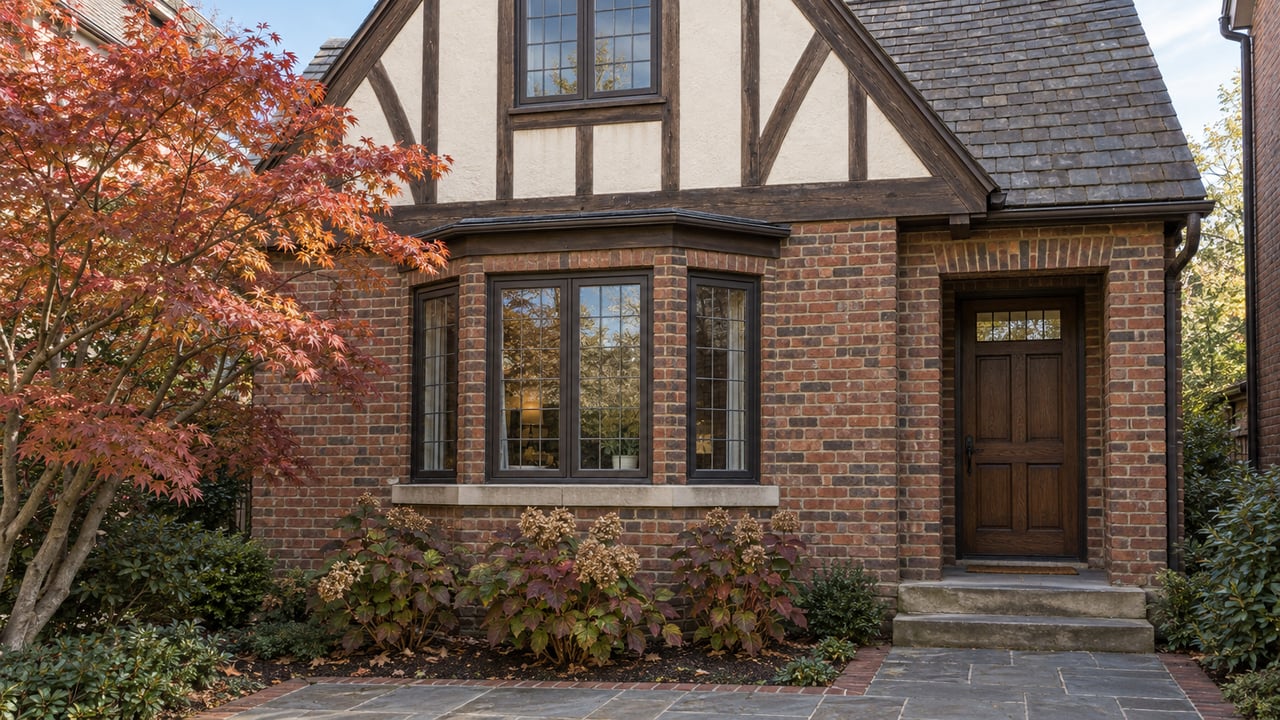
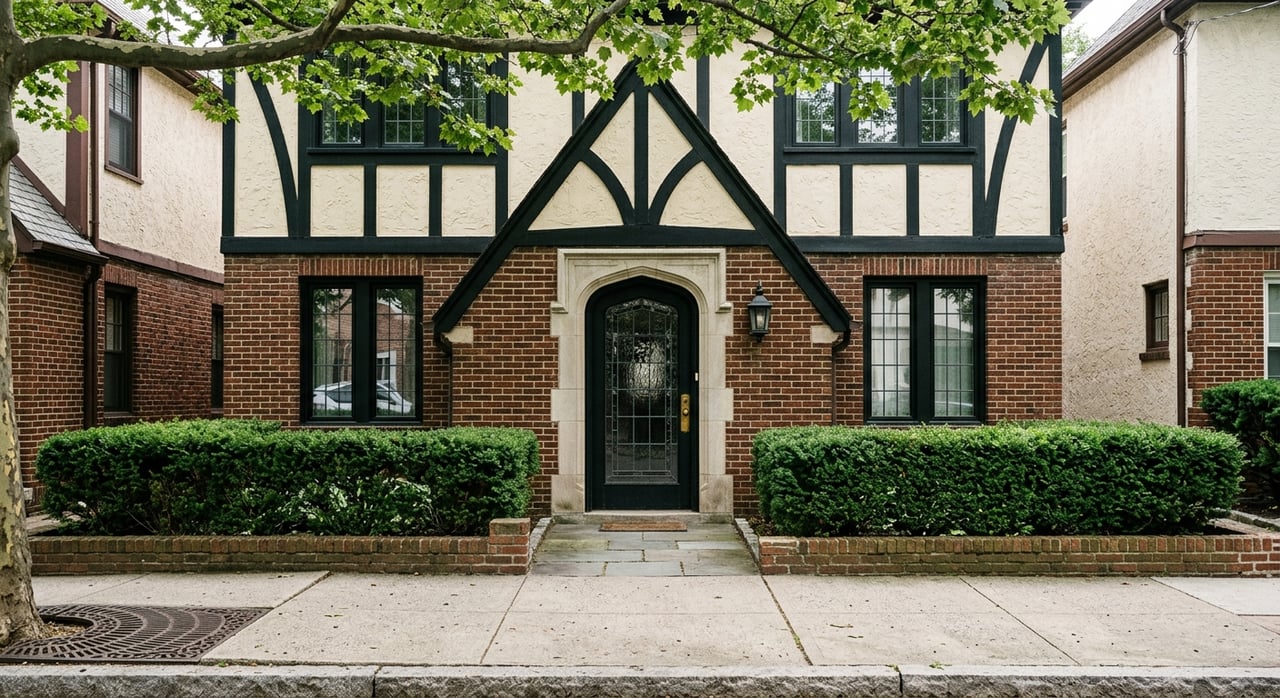
The neighborhood is known for pre-war colonial and Tudor homes, Tudor apartment buildings, and later six-story apartment buildings. If your goal is to find something more house-like or architecturally traditional, Kew Gardens can offer a different feel from neighborhoods dominated by newer apartment inventory.
Best for transit access and apartment living
Jackson Heights
Jackson Heights is one of the strongest transit neighborhoods in Queens. The Jackson Heights-Roosevelt Avenue/74th Street-Broadway hub combines five subway lines, multiple bus connections, and a direct airport bus link, which gives you a lot of flexibility if your commute or travel patterns vary.
The housing stock also has a distinctive identity. City materials describe Jackson Heights as the first U.S. community developed with garden apartments, with large cooperative apartment buildings and internal courtyard gardens that still shape the neighborhood. If you value transit density, walkability, and apartment living, Jackson Heights is worth a close look.
Long Island City revisited
Long Island City belongs in this category too because it checks both boxes at once. You get high transit density and an inventory base that leans heavily toward apartments, including many newer buildings.
For buyers who are comfortable with a denser environment and want several ways to reach Manhattan, LIC is often one of the simplest places to start. The tradeoff is that the housing feel is very different from lower-rise, co-op-heavy parts of central Queens.
How housing type changes the decision
The biggest Queens commute tradeoff is usually not whether you can get to Manhattan. It is what kind of home and neighborhood setting you want once you get back at the end of the day.
Broadly, commute-friendly Queens neighborhoods fall into two housing patterns:
- More apartment-focused: Long Island City and parts of Astoria tend to have more newer, taller apartment buildings and condo inventory.
- More established and low-rise: Sunnyside, Woodside, Jackson Heights, Forest Hills, and Kew Gardens often feature prewar co-ops, garden apartments, Tudor homes, and low-rise apartment buildings.
That matters because your commute priorities may shift once you compare square footage, layout, building rules, and overall streetscape. A buyer who starts by chasing the shortest trip to Midtown may end up preferring a neighborhood with slightly longer travel time but more space or a housing type that feels like a better long-term fit.
Co-op and ownership details to keep in mind
If you are looking in Queens, there is a good chance you will be comparing co-ops with condos or houses. In co-op-heavy neighborhoods, board approval can be part of the process, and some buildings may have income, resale, or sublet restrictions.
That does not make co-ops a bad choice. It simply means the buying process can be more regulated than a standard condo purchase, especially in older housing stock or buildings with specific ownership structures. Going in with clear expectations can help you compare neighborhoods more realistically.
Which Queens neighborhood fits your commute goals?
If your top priority is fast Midtown access, Long Island City, Sunnyside or Woodside, and Forest Hills are some of the strongest options based on current subway, ferry, and LIRR timing.
If you want the best balance of commute and neighborhood feel, Astoria and Forest Hills often stand out. Both offer manageable Manhattan access with housing choices and streetscapes that can feel more residential than LIC.
If you want dense transit access and apartment living, Jackson Heights and Long Island City are especially strong fits. They work well for buyers who value flexibility, connectivity, and apartment-oriented housing stock.
If you want something more house-like among commute-friendly areas, Kew Gardens, parts of Forest Hills, and some Astoria blocks may be the most appealing. These areas lean more toward homes, Tudor architecture, and lower-rise streetscapes.
The best choice comes down to the full picture: how you commute, where in Manhattan you need to go, what type of home you want, and how much flexibility you need from your building or neighborhood. If you are comparing Forest Hills, Kew Gardens, Astoria, Jackson Heights, Sunnyside, Woodside, or Long Island City, it helps to look at commute time and housing type side by side rather than treating either one as the whole story.
If you want help narrowing down which Queens neighborhood best matches your commute, budget, and preferred housing style, Rachel Borut can help you compare the options with clear, local guidance.
FAQs
Which Queens neighborhood has the fastest commute to Manhattan?
- Based on current schedules, Long Island City, Sunnyside or Woodside, and Forest Hills are among the strongest choices for fast Manhattan access.
Is Forest Hills a good choice for commuting to Midtown Manhattan?
- Yes. Current MTA draft timetable samples show Forest Hills reaching Penn Station in about 12 minutes and Grand Central in about 14 minutes on some weekday runs.
Does Astoria offer an easy commute to Manhattan?
- Yes. Astoria has a direct N/W subway corridor, and a representative weekday run from Astoria-Ditmars Blvd to Times Sq-42 St is about 32 minutes.
Are there Queens neighborhoods with ferry service to Manhattan?
- Yes. Long Island City and Astoria both have NYC Ferry service, which can be a useful alternative depending on your destination and schedule.
What housing types are common in commute-friendly Queens neighborhoods?
- It varies. Long Island City and parts of Astoria lean more toward newer apartment buildings, while Sunnyside, Woodside, Jackson Heights, Forest Hills, and Kew Gardens often have prewar co-ops, garden apartments, Tudor homes, and low-rise buildings.
Should buyers in Queens pay attention to co-op rules?
- Yes. In co-op-heavy neighborhoods, board approval and building-specific rules around income, resale, or subletting can be an important part of the decision.