Ever scroll through Forest Hills listings and wonder why one home feels storybook, another feels classic prewar, and the next looks clean-lined and practical? That mix is part of what makes Forest Hills so interesting, especially if you are trying to figure out what fits your lifestyle, budget, and maintenance comfort level. When you know the architectural styles buyers notice here, you can read listing photos more clearly and make smarter comparisons in person. Let’s dive in.
Why Forest Hills Feels So Varied
Forest Hills does not read like a one-style neighborhood. According to Queens Community Board 6, the area includes a mix of low- and high-density housing, with curved streets and Tudor-style buildings concentrated in Forest Hills Gardens and many rental, co-op, and condominium apartment complexes elsewhere.
That layered look comes from different waves of development. Forest Hills began in 1906, and Forest Hills Gardens started taking shape in 1909 as a planned garden community. Later, apartment growth accelerated after the Queens Boulevard subway opened in 1936, which helps explain why the neighborhood now feels like a sequence of building eras rather than one uniform district.
For you as a buyer, that means style is not just about curb appeal. It often hints at layout, room size, storage, upkeep, and even how a block feels from one section of Forest Hills to another.
Tudor Homes Stand Out Fast
What Tudor details look like
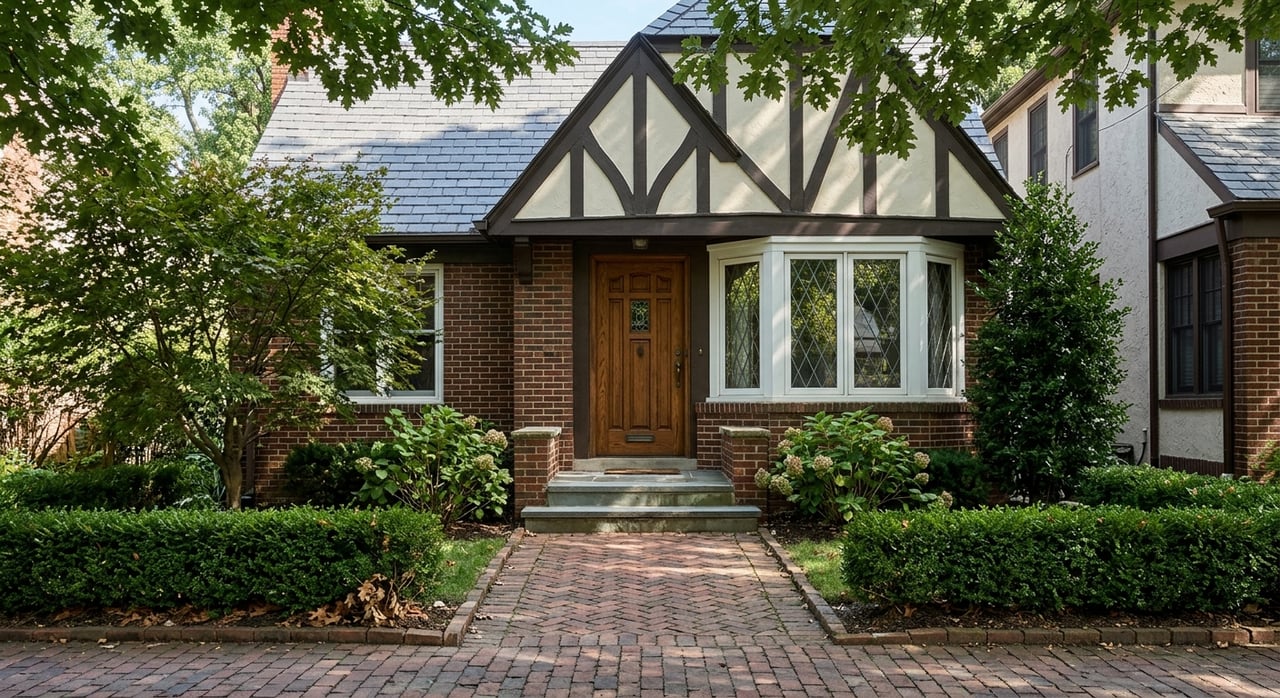
Tudor and neo-Tudor homes are often the easiest style to spot in Forest Hills. Common visual cues include steep gables, half-timbering, grouped rectangular windows, bay windows, patterned brickwork, and tall chimneys.
In Forest Hills, this look is especially visible in Forest Hills Gardens. The style also appears in places like Forest Close and Arbor Close, where the architecture creates a strong sense of rhythm from one home to the next.
Why buyers notice Tudor homes
These homes tend to make a strong first impression in listing photos. The rooflines, brick patterns, and decorative detailing often give them a more handcrafted, historic look than later buildings.
Buyers also notice that Tudor homes can come with different maintenance expectations. The combination of brick, stucco, timber, slate, and steep rooflines means upkeep may center more on roofs, masonry, window trim, and decorative exterior details.
Rowhouses and Close-Style Clusters Feel Different
How to identify a rowhouse cluster
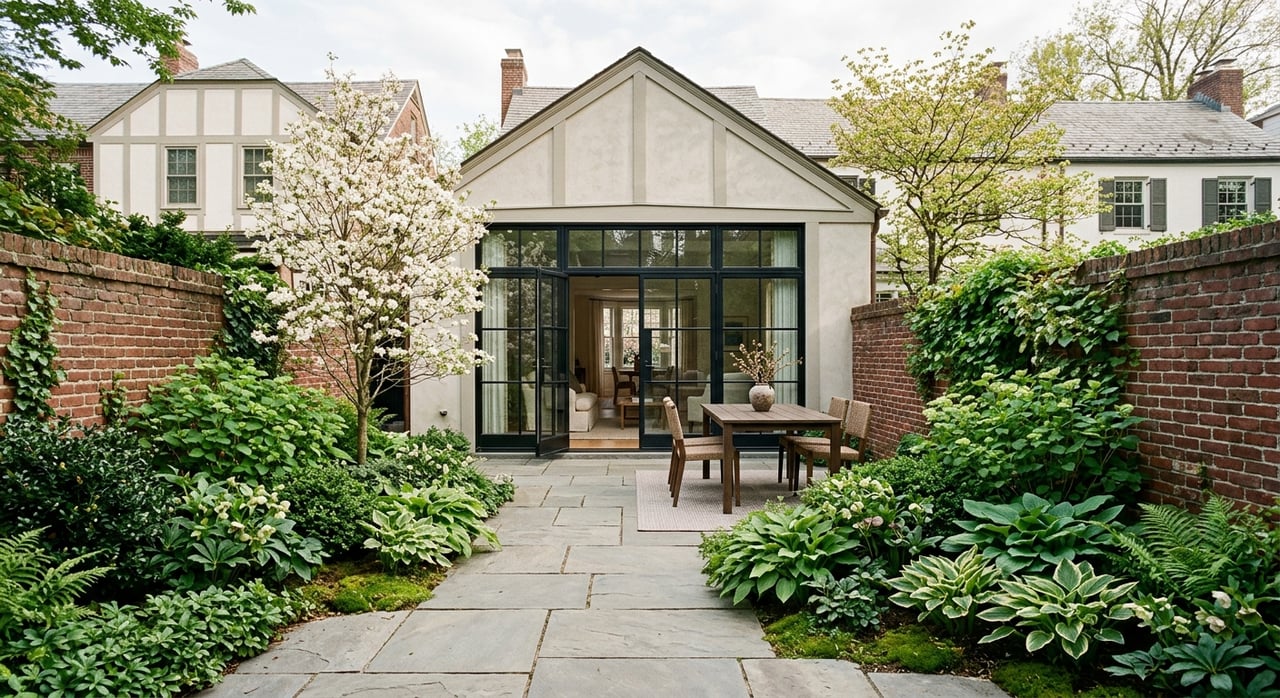
Rowhouses are attached homes that share one or more side walls with neighboring homes. In Forest Hills, the neo-Tudor rowhouse clusters at Forest Close and Arbor Close are especially recognizable because of their attached form, repeated facades, and shared green or lane space.
That shared layout can create a more enclosed, village-like feeling than you may get with detached houses. If you are comparing listings, this is one of the clearest examples of how block pattern and architecture shape the overall experience of a home.
What the floor plan may tell you
Historic rowhouse plans are often narrow and deep. Public rooms are usually positioned toward the front, kitchens toward the back, and bedrooms on upper floors.
For you, that can mean the flow feels more linear than in a wider apartment or detached house. Hallway placement, stair location, and room order often matter more in rowhouses, so it helps to look beyond square footage and pay attention to how the space actually moves.
Prewar Apartments and Co-ops Have a Distinct Feel
Why prewar buildings attract attention
Prewar apartment houses are one of the major architectural layers buyers notice in Forest Hills. In and around Forest Hills Gardens, many multi-unit buildings began as rental apartments or hotel rooms and are now co-ops.
Local examples noted by the Forest Hills Gardens Foundation include the Forest Hills Inn, the Raleigh, the Marlboro, the Forest Arms, The Greenway, the Inn Apartments, the Grosvenor Square, the Leslie, and Garden Arms. Even when buyers do not know the building names yet, they often recognize the older style right away.
What interiors may feel like
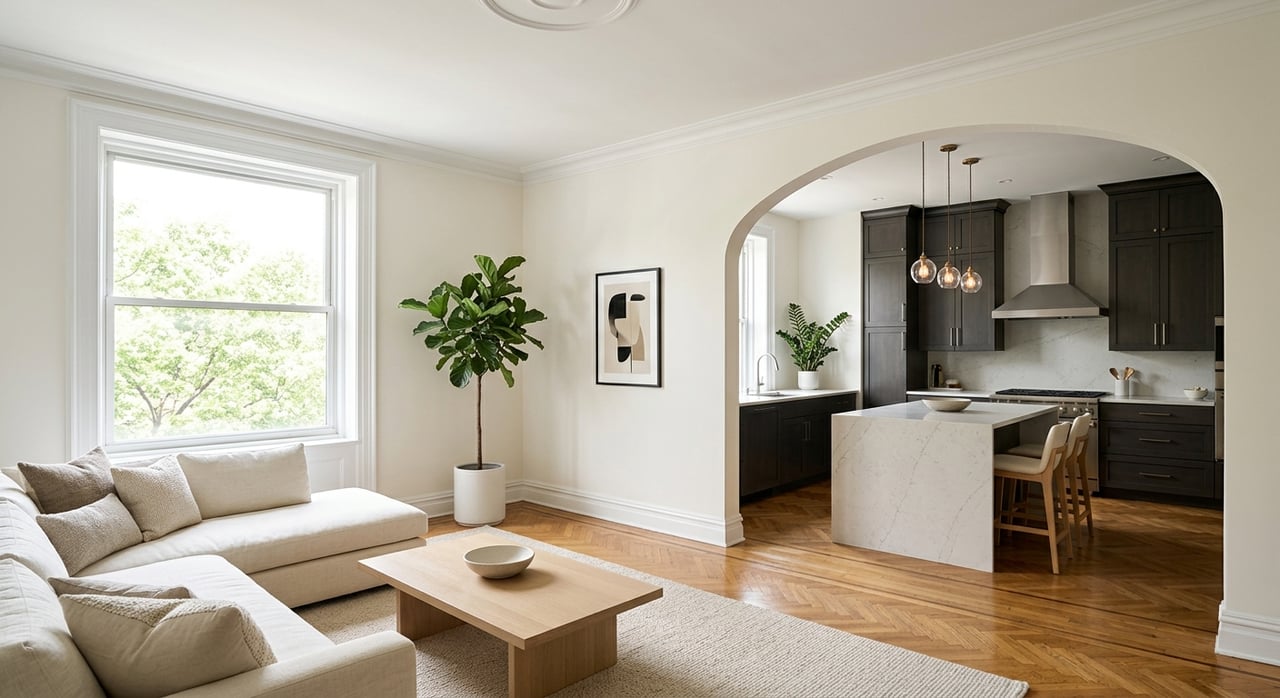
Prewar apartments often stand out because they can feel more individualized inside. Reported features in these buildings include fireplaces, built-ins, Murphy beds, drop living rooms, and larger room counts.
That helps explain why many prewar homes feel roomier and more compartmentalized than newer apartments. If you like defined rooms, architectural details, and a layout with separation between living areas, this style may catch your eye quickly.
Mid-Century and Postwar Buildings Read More Streamlined
What to look for in later buildings
Not every Forest Hills listing leans historic. Planning materials for the Queens Boulevard and Austin Street area describe 4- to 6-story midblock buildings and 6- to 14-story buildings along Queens Boulevard, while areas north of Queens Boulevard are described more as low-rise detached housing.
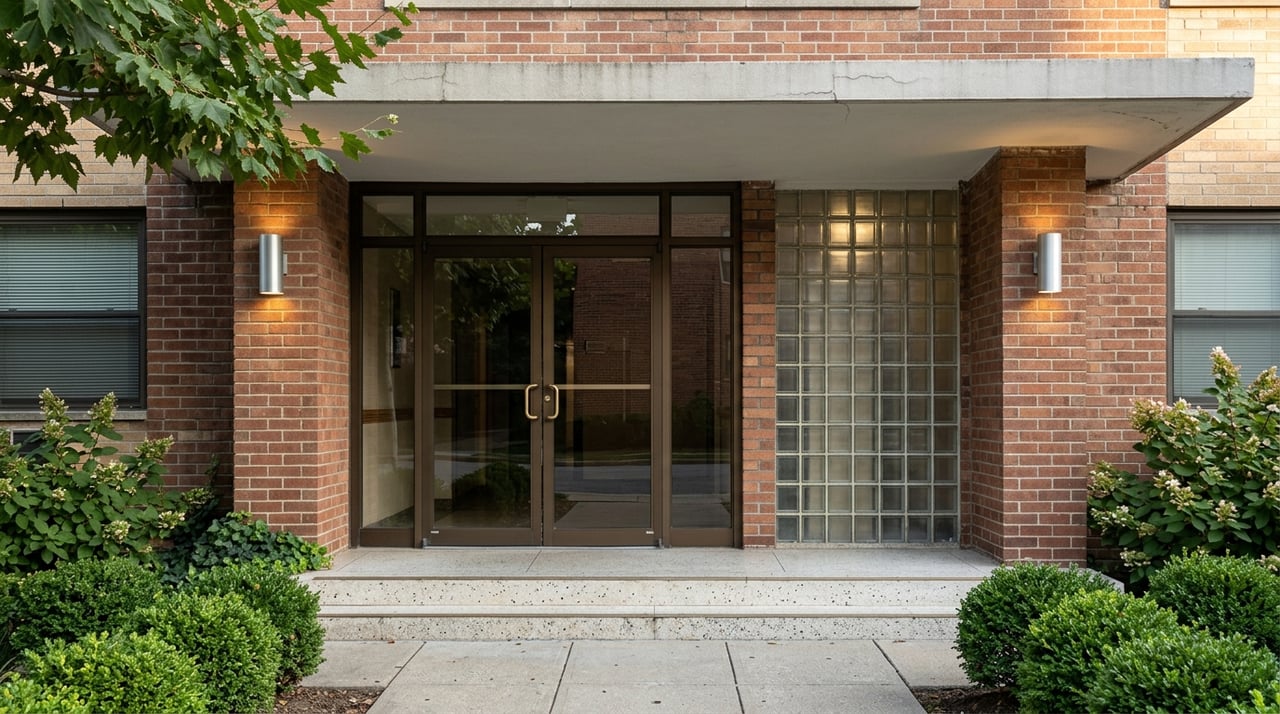
In practical terms, later apartment buildings often look simpler and less ornamented than Tudor homes or prewar stock. You may notice flatter roofs, more rectangular forms, and balconies that shape the facade.
How the lifestyle feel can differ
Postwar and mid-century buildings often present a more streamlined, easier-care impression. Later Gardens examples such as Garden Arms from 1961 reflect that move toward smaller apartment living with less decorative complexity.
If you prefer a simpler exterior and do not need historic detailing, these buildings may feel more straightforward. They can also offer a different balance between charm, maintenance, and everyday convenience.
Style Affects Light, Layout, and Daily Use
Interior flow changes by building type
Architecture influences how a home lives day to day. Rowhouses often feel narrow and deep, so the sequence of rooms shapes privacy, furniture placement, and how natural light moves through the home.
Apartment buildings solve light and air differently. Some use central corridors, some rely on courtyards, and some use balconies to bring sun, shade, and outdoor connection into the plan.
Why this matters when touring homes
If you are touring several Forest Hills properties in one weekend, style can help you compare them more fairly. A prewar co-op may offer more separate rooms and built-in character, while a later apartment may feel more efficient and visually simpler.
Neither is automatically better. The key is understanding what the style usually signals so you can focus on the homes that match how you want to live.
Maintenance Questions Buyers Should Ask
Older details can mean more upkeep
Architectural charm often comes with practical responsibilities. Tudor and neo-Tudor homes may require closer attention to rooflines, masonry, exterior trim, and decorative materials.
With attached homes, preservation guidance also stresses the importance of original walls, windows, floors, and the overall rhythm of the row. That matters because your home is part of a larger visual pattern, not just a standalone structure.
Alteration rules may apply
In landmarked areas, the New York City Landmarks Preservation Commission requires advance approval for alterations, reconstruction, demolition, or new construction affecting a designated building. The Forest Hills Gardens Corporation also states that its mission is to preserve the community’s architectural character.
For you, this means it is smart to ask early about renovation plans, exterior changes, and approval requirements. If you love original architecture, these protections may be a plus. If you want broad flexibility, they are important to understand before you buy.
Quick Visual Cues for Listings
If you want a faster way to scan Forest Hills listings, these clues can help:
- Tudor or neo-Tudor: steep gables, half-timbering, patterned brick, tall chimneys
- Rowhouse or close-style cluster: attached homes, repeated facades, shared garden or lane space
- Prewar apartment or co-op: older building style, more individualized interiors, possible fireplaces or built-ins, often more separate rooms
- Mid-century or postwar apartment: simpler massing, flatter roofs, balconies, less exterior ornament
Once you start spotting these patterns, listings become easier to decode. You are not just looking at finishes and square footage anymore. You are also reading the building’s era, layout logic, and likely maintenance profile.
Why Local Context Matters
Forest Hills is one of those neighborhoods where architecture tells a big part of the story. From early garden-city planning to Tudor homes, close-style rowhouses, prewar apartment houses, and postwar co-ops, the variety from block to block is real.
That is exactly why local guidance matters when you are buying here. A lifelong Forest Hills perspective can help you look past the first impression and understand how a building’s style may affect resale, renovation plans, and everyday livability. If you want help narrowing down the right fit in Forest Hills, Rachel Borut can help you make sense of the neighborhood one block and one building at a time.
FAQs
What architectural styles are most common in Forest Hills?
- Forest Hills is known for a mix of Tudor and neo-Tudor homes, close-style rowhouse clusters, prewar apartment houses and co-ops, and mid-century or postwar apartment buildings.
How can you identify a Tudor home in Forest Hills?
- You can usually spot a Tudor or neo-Tudor home by its steep gables, half-timbering, patterned brickwork, grouped windows, bay windows, and prominent chimneys.
What makes Forest Hills rowhouses different from detached houses?
- Forest Hills rowhouses are attached to neighboring homes and often sit in clusters with repeated facades and shared green space, which creates a more enclosed and village-like feel.
What should buyers expect from prewar apartments in Forest Hills?
- Prewar apartments in Forest Hills often feel more individualized and may include features like fireplaces, built-ins, Murphy beds, drop living rooms, and a more compartmentalized room layout.
How do postwar buildings in Forest Hills usually look?
- Postwar and mid-century buildings in Forest Hills often look more streamlined, with simpler shapes, flatter roofs, less ornament, and balconies that help define the exterior.
Why does architecture matter when buying in Forest Hills?
- Architecture can affect how a home feels and functions, including layout, natural light, maintenance needs, and whether exterior changes may require approvals in certain areas.